Tuesday, November 4, 2014

Latino Authors

Last week Luis Alberto Urrea visited Lake Forest to talk about his novel, Into the Beautiful North, as part of Lake Forest Reads: Ragdale our city’s one book/one community program.  This funny, poignant story deals with topical issues surrounding the United States’ relationship with Mexico and our policies along the Mexican-American border. 

Nineteen-year-old Nayeli is the heroine of this tale.  She works at a taco shop in her Mexican village and dreams about her father, who journeyed to the U.S. when she was young. He hasn't been home since then and his letters have stopped. While watching the film, The Magnificent Seven, she decides to go north herself and recruit seven men -- her own "Siete Magníficos"-- to repopulate her hometown and protect it from the bandidos who plan on taking it over.

If you haven’t had a chance to read it, there are still plenty of copies at the library. Stop by and check one out. But there are also other Latino authors that you may find interesting; you can’t go wrong with these classics:


Like Water for Chocolate by Laura Esquivel is set in Mexico at the beginning of the 20th century.   Tita, the youngest daughter of a well-born rancher, has always known her destiny: to remain single and care for her aging mother. When she falls in love, her mother prohibits the liaison and insists that Tita's sister marry Pedro, in her place.

The House on Mango Street by Sandra Cisneros is told in a series of vignettes. It is the story of a young girl, Esperanza Cordero,  growing up in the Latino section of Chicago.

How the Garcia Girls Lost Their Accents by Julia Alvarez. Four sisters recount their adventures of growing up in two cultures after they are forced to flee the Dominican Republic and arrive in New York City in the 1960s.


Check out this list of books by other Latino authors including recently released Loteria by Mario Alberto Zambrano and This is How You Lose Her by Junot Diaz.

Monday, October 27, 2014

Object Lessons

Here are a variety of histories told through museum objects and other items such as maps, stamps, recipes, and songs.  So if you're a visual learner, a museum-goer, or you just like to approach your learning and reading in manageable lists or bits, you might enjoy these histories, listed here from broader to narrower subjects:


A History of the World in 100 Objects   by Neil MacGregor (Viking, 2011).  As Director of the British Museum, MacGregor wrote this book based on a BBC radio program that described 100 of the museum's objects chosen by these rules: 1) They represent the beginning of human history to the present. 2) They represent the whole world as much as possible. 3) They represent varied aspects of human experience. 4) They represent whole societies, not just the rich or powerful.  
The objects and their brief stories are laid out chronologically, but could easily be read and appreciated in random order.  [Other titles of a similar world-wide scope are:  Earth in 100 Groundbreaking Discoveries  by Douglas Palmer (Firefly, 2011) and A History of the World in Twelve Maps  by Jerry Brotton (Viking, 2012).]

These two recent books by West (America, 2014 and Britain, 2013) give interesting 3-5 page glimpses into British and American events, people, styles, and attitudes based on individual stamps laid out chronologically.  You need not be a stamp collector to enjoy these books.  In fact, West prefaces the British history with these words: "Stamps tell stories.  They speak to us across generations - if only we'd stop squeezing them into albums and worrying about their catalogue value, and just listen to their voices instead."


A History of New York in 101 Objects   by Sam Roberts (Simon & Schuster, 2014).  Roberts, The New York Times urban affairs correspondent, wrote this history following the example of MacGregor from the British Museum (see above). He looked for enduring objects that played a transformative role in the city's history, and consulted museum curators, archivists, librarians, other journalists, and other New Yorkers to assemble this collection of "distinctive objects that span the history of New York, nearly all reproduced in brilliant color." [from flyleaf].


And here are three histories on narrower subjects:  The History of Rock 'n' Roll in Ten Songs  by Greil Marcus (Yale Univ. Press, 2014) - the significance of ten songs recorded and re-recorded between 1956 and 2008; Season of Saturdays : a History of College Football in 14 Games  by Michael Weinreb (Scribner, 2014) - 14 of the greatest games of all time and their greater significance; A History of Food in 100 Recipes  by William Sitwell (Little, Brown, 2013) - the British food writer's selection of the best chapters in the history of food, with culinary characters, villains, and recipes, which have not been updated for modern cooks.


Monday, October 13, 2014

Opera Resources at the Library


Link to Giovanni Program Book
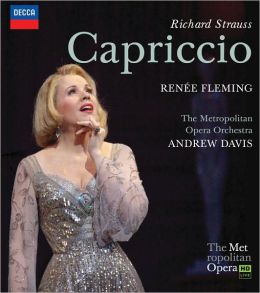
Lyric Opera of Chicago's season is well underway with Don Giovanni, Mozart's "comic drama" based on the Don Juan story, running through October 29th; and Capriccio, Richard Strauss's "conversation piece for music" that weighs the importance of words against music, running through October 28th.  

Recordings, DVDs, scores. and librettos for opera-goers and others wanting to further their appreciation of any of this season's operas can be found at this link:  Lyric Opera of Chicago Resources 2014-15 Season.  Free streaming commentary for each opera is available through the
Lyric Opera's website at this link:  
Lyric Opera Commentaries . 

More information about Don Giovanni can also be found in the Lyric Opera's complete program book (link to PDF is above) and in the following title and others like it from the library's collection:


Getting the most out of Mozart : the Vocal Works  by David Hurwitz (Amadeus Press, 2005).  This book begins with an overview of Mozart's operatic style and continues with chapters on several of Mozart's great operas, including Don Giovanni; placing each opera in the context of Mozart's other works, summarizing the plot, discussing orchestration, and the opera's characters and their music.  The accompanying CD includes a few arias from Don Giovanni as well as selections from other Mozart works.


Find out more about Capriccio in The Cambridge Companion to Richard Strauss  edited by Charles Youmans (Cambridge Univ. Press, 2010).  Discussions of it can be found in the chapters on Strauss's last works, his musical quotations and allusions, and his musical commentary on the nature of music itself.


Tuesday, September 30, 2014

October is Lake Forest Reads:Ragdale Month

Join your friends and neighbors in reading the novel, Into the Beautiful North by Luis Alberto Urrea during Lake Forest Reads:Ragdale, October’s celebration of literature and the arts in Lake Forest. Then choose from a schedule of related activities ranging from a festive Mariachi Band performance, to book discussions, to a lecture on Mexican-American border issues. The month-long calendar culminates in a visit by the author, Luis Alberto Urrea on October 28th. (Click here for the full schedule,)

Into the Beautiful North is the story of nineteen-year-old Nayeli who works at a taco shop in her Mexican village and dreams about her father, who left for the U.S. when she was young. He hasn’t been home since then and his letters have stopped. While watching the film, The Magnificent Seven, she decides to go north herself and recruit seven men -- her own "Siete Magníficos"-- to repopulate her hometown and protect it from the banditos who plan on taking it over. This funny, poignant story deals with topical issues surrounding the United States’ relationship with Mexico and our policies along the Mexican-American border. 

Lake Forest Reads:Ragdale is a one book/one community program sponsored by Lake Forest Library and The Radgale Foundation.  The program encourages the Lake Forest community to read one book by a writer affiliated with Ragdale, the artists’ residency that has supported emerging and best-selling authors and their creative process for over 35 years. Community Partners include Dickinson Hall, Friends of Lake Forest Library, Jolly Good Fellows, and Lake Forest College. Programs are being held throughout the community and all are open to the public. Most are free unless otherwise noted.  Copies of the book are available to borrow at Lake Forest Library and to purchase at Lake Forest Book S
tore.

Luis Alberto Urrea, 2005 Pulitzer Prize finalist for nonfiction and member of the Latino Literature Hall of Fame, is a prolific and acclaimed writer who uses his dual-culture life experiences to explore greater themes of love, loss and triumph. Born in Tijuana, Mexico to a Mexican father and an American mother the critically acclaimed and best-selling author of 13 books, Urrea has won numerous awards for his poetry, fiction and essays. Urrea's recent novel, Into the Beautiful North, a national best-seller, earned a citation of excellence from the American Library Association Rainbow's Project and was selected by the National Endowment for the Arts for their Big Read program.  Urrea lives with his family in Naperville, Illinois. He is a professor of creative writing at the University of Illinois-Chicago.