Thursday, June 4, 2015

New Technologies Turn Everybody into Makers


Are your children using 3D printers at school, but you’ve never seen one in action?  Is a Maker Faire like a Renaissance Faire?  Is Raspberry Pi a dessert for mathematicians?  Do you earn digital badges?  Arduino??  There is a whole new vocabulary of products, programming and inventiveness at schools and libraries today.  Our Children’s Library is keeping up by having books for children  that explain the origins, use and value of these new technologies.

Some of today's most incredible inventions are the work of makers-people who apply creativity to the latest technology to build a variety of remarkable homemade devices. Whether they are programming tiny computers, designing their own board games, or finding new uses for plastic, makers work together to share new ideas and technology.   [This book] takes a look at people and their creative ideas. It explores how lasting contributions are made in diverse field such as sports, entertainment, medicine, technology, and transportation. 

But what good is it to be a Maker if you can’t share and show?  Thus there came about …

Readers will take a trip inside a Maker Faire to see how makers come together to share ideas and projects.

Do you know anyone interested in electronics and robotics?

The Arduino is a small inexpensive computer that can be used to build and program almost anything a maker can imagine. Readers will discover new processes, integrate visual information with text, and learn technical word meanings as they read the history of the Arduino and see how makers have put it to use in their inventions. They will also find out how to set up and program their own Arduino devices.

The Raspberry Pi is a small computer that allows almost anyone to learn about computer programming.   It is aimed especially at young students.  They will also learn how to set up and begin programming their own Raspberry Pis.  https://www.raspberrypi.org/

Sorry, we don’t have any books on Squishy Circuits, yet.  But check out University of St. Thomas, the developer of this combination of play doh and electronic circuit kits. http://courseweb.stthomas.edu/apthomas/SquishyCircuits/

Games are proving to be a successful method for learning at all levels of education.  Drawing on board and video games, fields such as medicine, social entrepreneurship, and library science use games to engage students. 

Young students will discover new processes, learn technical word meanings and find out how games are designed and what makes a good game. They will also learn how to plan and create games of their own.  Although this book focuses on board games, the principles also apply to video games.

Discusses how to create digital badges that let people know about a new skill someone has learned.

Using the free program SketchUp, learn how to create computer-generated 3D models like the ones used in video games and animated films.  Once you learn how to use a computer graphics program you can create objects with …


As they become more common and more powerful, 3D printers are allowing makers everywhere to bring their ideas to life. Readers will discover new processes, integrate visual information with text, and learn technical word meanings as they discover how 3D printers work and how makers are using them today. They will also learn how to create their own inventions from 3D computer models.

Monday, June 1, 2015

Young Man with a Horn and Lake Forest Connection

In swing with our Read to the Rhythm Adult Summer Reading Program beginning today, the library is featuring  jazz-themed books from our collection through August 1st, when the program ends.  You can find some of those book along with bookmarks listing more jazz fiction and non-fiction titles at the center of the library's Too Good to Miss shelves in the rotunda through August 1.

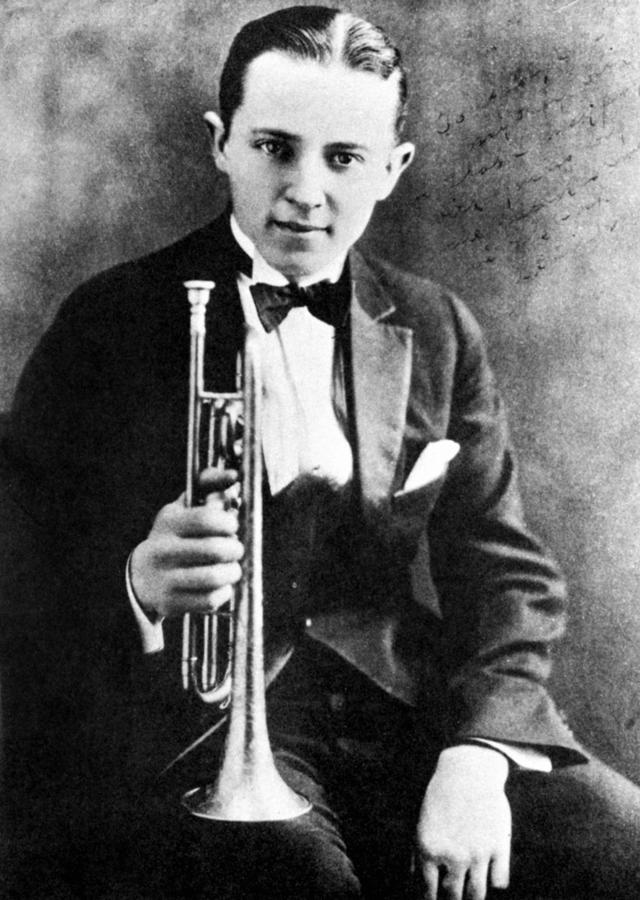
The Chicago Tribune article excerpted here (May 19, 1938) identifies the first novel devoted entirely to jazz - Dorothy Baker's Young Man with a Horn, loosely based on the life of cornetist Leon "Bix" Beiderbecke, who briefly attended Lake Forest Academy.

photo source: riverwalkjazz.stanford.edu (public domain)
Bix was sent from hometown Davenport, Iowa to the academy in 1921 because his parents disapproved of his self-taught jazz cornet and piano-playing and hoped his jazz ways would be reformed through solid education and discipline. From the academy, however, Bix made frequent trips to Chicago to hear and play jazz and was so often truant that he was expelled in May of 1922.  After a short time back home working for his father, Bix set out on a music career, spending time in Chicago, Saint Louis, and New York playing with the Wolverines, the Paul Whiteman Orchestra, the Sioux City Six and the Gene Goldkette Orchestra. He played with saxophonist Frankie Trumbauer (Tram) in many of these bands, and together "Bix and Tram" inspired a younger generation of Chicago jazz musicians such as Eddie Condon (guitar), Bud Freeman (tenor sax), Jimmy McPartland (cornet), and Frank Teschemacher (clarinet).

Fortunately Beiderbecke made many recordings during his tragically brief career. Suffering from alcoholism and poor health most of his adult life, he was only 28 years old when he died of pneumonia in August 1931. [The article above incorrectly gives 1933 as the year of his death.] Bix's cornet playing was known for its bell-like tone, unorthodox fingering, and the rhythmic placement and changing timbre of the notes within a melody.  Bix achieved cult status during the 1920s and "became the first high-profile romantic hero of jazz music."1  

Young Man with a Horn was made into a movie in 1950 with Kirk Douglas, Lauren Bacall, and Doris Day.  The Bix Beiderbecke Memorial Society formed in Bix's hometown of Davenport, Iowa in 1972 and has held the Bix Beiderbecke Memorial Jazz Festival (Bix Bash) there annually since then. Thousands of fans from across the U.S. and some other countries attend to hear a variety of bands play Bix's music.

Beiderbecke recordings and related titles from our collection are listed below.  Many of these titles were used as sources for this article.

Nonfiction:
Chicago Jazz: A Cultural History, 1904-1930 by William Howland Kenney 781.65 KEN
History of Jazz 2nd ed. by Ted Gioia 781.65 GIO
Legends of Jazz by Bill Milkowski  781.65 MIL
New Grove Dictionary of Jazz, 2nd ed., Vol. 1  Ref 781.65 NEW
(1.) Oxford Companion to Jazz edited by Bill Kirchner.  pp. 122-131  781.65 OXF

Fiction:
1929 by Frederick W. Turner  FICTION TURNER
Young Man with a Horn by Dorothy Baker  FICTION BAKER

Recordings:
Bix & Tram: Bix Beiderbecke • Frankie Trumbauer  CD JAZZ B Disc A, B, C, D
The Complete Wolverines, 1924-1928 CD JAZZ W


Wednesday, May 27, 2015

Read to the Rhythm - Summer Reading Begins

Don't Miss out! This year our Summer Reading Programs begin Monday June 1 and conclude Saturday August 1, 2015.  Come in any time to register. 

See below for details on the Children's, Teen, and Adult "Read to the Rhythm" programs. 


Children's Summer Reading Program
  • Earn awards for time spent reading or having books read to you this summer!
  • All children are eligible – “read to” ages through grade 6.
  • Register at the desk as you enter the Children's Library.
  • Read for two hours and earn a cowbell.
  • Read three more hours and earn a hand powered flashlight.
  • Read four more hours and earn a book.


Teen Summer Reading Program
  • Lake Forest residents entering grades 7 through 12 are eligible.
  • Register in the Children's Library or at the Adult Reference Desk.
  • Read 4 books to earn a $10 gift card to the Lake Forest Book Store and be included in the final prize drawings.
  • Fill out a raffle ticket for each book you read or listen to this summer. It’s that easy!
  • Every raffle ticket, up to a maximum of 36, will be eligible for the final prize drawings.
  • The last day to hand in raffle tickets is Saturday, August 1.
  • Grand prize is a $100 gift card to the Lake Forest Book Store.
  • 8 runners-up will receive a $20 gift card to one of the following: Einstein Bros Bagels, Ferentino’s Pizzeria, Food Stuffs, Gerhard’s Elegant European Desserts, Jolly Good Fellows, Kiddles Sports Inc., Starbucks Coffee, and Sweet’s Chocolates.


  Adult Summer Reading Program
  • Come to the Reference Desk to register and pick up a punch card. All Lake Forest residents 19 years of age and older are eligible.
  • After you read or listen to a book, get your card punched and fill out a raffle form.
  • Prizes, including gift certificates to local stores and restaurants, will be drawn each week.
  • Read/listen to four books, complete the punch card and receive a Lake Forest Library gift.
  • All who complete a punch card are eligible for the Grand Prize – a Chamber of Commerce gift card.
  • Limit – one punch card per patron.
  • The Grand Prize drawing will be held in August.

The Summer Reading Programs are funded by Friends of Lake Forest Library.

Thursday, May 7, 2015

Audio Books +


These audio books for children and teens offer more than just a narration of the book.  Enhanced content, music, and  vivid voice characterization make for a memorable listening experience.  Several have been nominated for Audie Awards by Audio Publishers Association.  Check their site May 28th to see a full list of nominees and winners.

 Follow Follow by Marilyn Singer
  Follow Follow by Marilyn Singer/ill. Josée Masse, read by Singer and Joe Morton
A compilation of reverso poems featuring characters from the fairy tale kindom.  Clever verses are read once, then repeated in reverse order, often by an opposing character.  What do the Hare and the Tortoise think of their chances in the race?  Aladdin and his genie both wish for freedom from their masters.  King Midas’s view of himself is “mirrored” by a child onloooker.  A highly successful example of pairing a book with a read-along CD, as the printed poems let us  see just where the re”vers”als occur.  Josée Masse’s illustrations of bold brightly colored characters energentically illustrate the dual verses.


 Rabbit Ears: The Elephant's Child
  Rabbit Ears Storybook Classics are short tales read by noted actors and enhanced with original background music and musical characterization, also composed by famous musicians.  Story segments are typically 20+ minutes each. Hear  Robin Williams as Pecos Bill, Cher as the Ugly Duckling,  Jack Nicholson reading Rudyard Kipling’s Just So stories.  The wide selection includes fairy tales, folk tales from around the world, American tall tales, and Bible stories.


 The Crossover by Kwame Alexander
  Crossover by Kwame Alexander, narrated by Corey Allen.  The Newbery Medal  and Coretta Scott King Award winner from 2015, this novel in verse describes twin hot shot basketball brothers.  Their dad was a former pro player, their mom is assistant principal at school – no pressure there!  Told in alternating voices, Alexander captures the exhilaration and feeling of playing basketball and the brothers’ bewilderment at the changes they experience in adolescence.  Sibling rivalry, concern over their father’s health, all come pouring out in fluid phrases as sweet as their moves on the court.  The book translates great as an audio production, with the poetic form still in evidence.  As we hear from the book’s primary voice, Dirty McNasty, Muhammed Ali isn’t the only sports figure who can spout poetry.


  The Graveyard Book by Neil Gaiman, performed by a full cast including the author (as the Poet Nehemiah Trot) and Derek Jacobi. This new recording of the multiple award winning fantasy has been nominated as Audio Book of the Year 2015 by the Audio Publishers Association.  (The originial recorded version, narrated soley by Gaiman, also won an Audie.)  The evil spirit, Sleer is truly creepily voiced, reminiscent of Harry Potter’s Dementors.  Appropriately, each chapter begins with music adapted from Le Danse Macabre.  As the primary narrator, Jacobi imbues his narration with an ominous tone.


 How to Catch a Bogle by Catherine Jinks
  How to Catch a Bogle by Catherine Jinks, narrated by Mandy Williams.  Nominated for an Audie award as best children’s book, ages 8-12.  In a magical Victorian England, we  follow the adventures of Birdie, an orphan who works for Alfred the Bogle Catcher.  She acts as the bait to entice the wispy, sooty, creatures out of the chimney or other hiding places.  While the text might be difficult to read as written phonetically, narrator Williams lucidly displays a variety of British accents in portraying the young, poor, rich of London, even prettily singing the songs Birdie sings to trap the bogles.


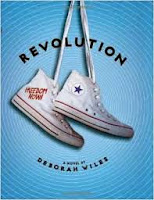
 Revolution by Deborah Wiles
  Countdown & Revolution   Books 1 & 2 of the Sixties Trilogy by Deborah Wiles.  Wiles and her narrators bring the 1960s, with all its turmoil, to life in books focusing on  the Cuban Missile Crisis and the Civil Rights Movement in Mississippi. The threat of nuclear war looms just beyond the horizon. The print versions are interspersed with photos, print ads, speech transcripts by famous figures from the time.  While we miss the photos in the audio version, the text is transcribed as actual news reports, TV and radio ads, and passable imitations of JFK, Khrushchev, LBJ and Martin Luther King.  Tying this social history together is the story of a child living through these time.  Read or listen to these books with your child or grandchild.  Wiles has done an incredibly thorough job recreating a decade that still reverberates.


 Blue Lily Lily Blue by Maggie Stiefvater
  Blue Lily Lily Blue (Raven Boys Cycle, #3) by Maggie Stiefvater, narrated by Will Patton.  Teen and adult fans who have been listening to the Raven Boys Cycle are in for a treat at the end of this installment.   Original music has been written and recorded for the verse at the beginning of the book: Queens and kings, Kings and queens … .  It plays at the end of the story.